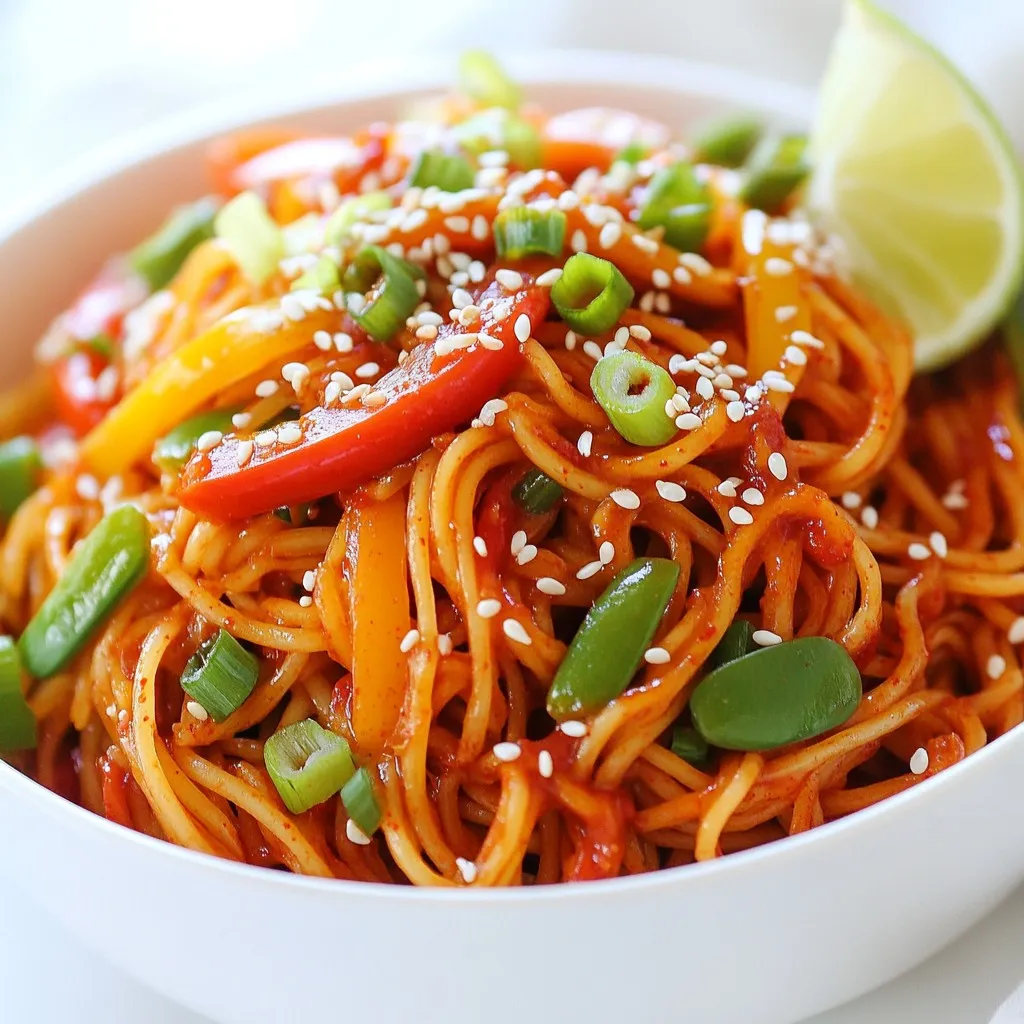
Are you ready to spice up your dinner routine? I’ve got the perfect dish for you: Spicy Gochujang Noodles! This flavorful recipe is not only simple to make but also incredibly satisfying. In just a few easy steps, you can enjoy a bowl of delicious noodles that pack a punch. Let’s dive into the vibrant world of gochujang and transform your weeknight meals together!
Why I Love This Recipe
- Bold Flavors: The combination of gochujang, garlic, and ginger creates a vibrant flavor profile that elevates simple noodles into an unforgettable dish.
- Quick and Easy: With a total preparation time of just 20 minutes, this recipe is perfect for a speedy weeknight dinner without compromising on taste.
- Colorful Presentation: The use of bell peppers and snap peas not only adds crunch but also makes the dish visually appealing, perfect for impressing guests.
- Customizable: You can easily modify this recipe by adding your favorite vegetables or proteins, making it versatile for different dietary preferences.
Ingredients
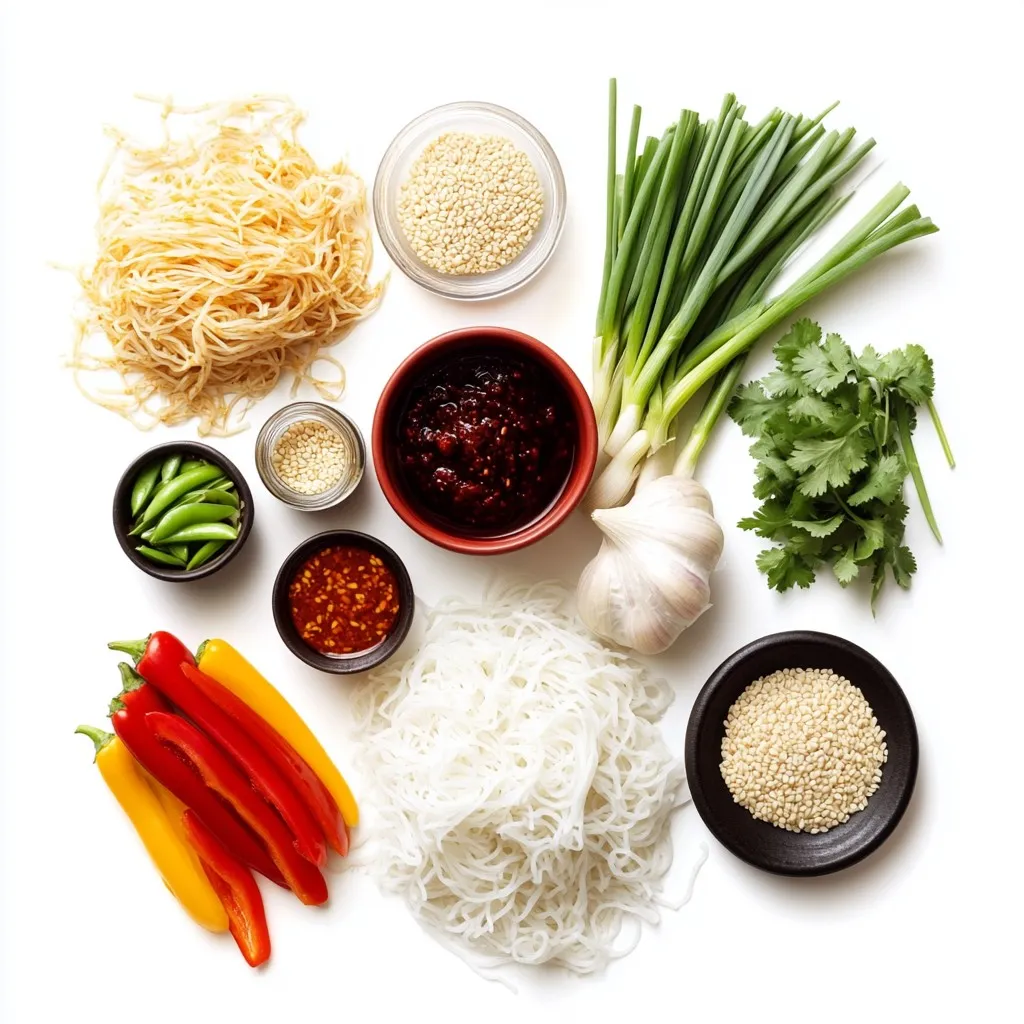
List of Ingredients
– 8 oz. rice noodles
– 2 tablespoons gochujang (Korean chili paste)
– 1 tablespoon soy sauce
– 1 tablespoon sesame oil
– 1 tablespoon honey or maple syrup
– 1 clove garlic, finely minced
– 1 inch ginger, freshly grated
– 1 cup bell peppers (red and yellow), cut into thin strips
– 1 cup snap peas, trimmed
– 2 green onions, finely chopped
– 1 tablespoon sesame seeds, toasted
– Fresh cilantro leaves for garnish (optional)
When picking ingredients, I suggest fresh produce. Fresh veggies will give your dish a bright flavor. For the rice noodles, look for quality brands that cook well. If you can’t find gochujang, you can try sriracha or chili paste as a substitute, but it will change the taste.
For the bell peppers, I love using both red and yellow. They add color and sweetness. Snap peas give a nice crunch. You can swap them for broccoli or bok choy if you prefer.
Make sure to toast the sesame seeds. This step brings out their nutty flavor and enhances the dish. Lastly, cilantro adds a fresh touch, but it’s optional. If you don’t like cilantro, you can skip it. Enjoy gathering these simple, fresh ingredients!
Step-by-Step Instructions
Cooking the Noodles
To get perfect noodles, start with boiling water. Add rice noodles and cook them until they are al dente, usually about 6-8 minutes. Stir them a few times to prevent sticking. After cooking, drain the noodles. Rinse them under cold water to stop cooking. This helps keep them firm. Let them sit in a colander to dry.
Preparing the Sauce
In a bowl, mix gochujang, soy sauce, sesame oil, and honey. Stir in minced garlic and grated ginger. Whisk until everything is smooth. This sauce brings great flavor to the noodles. You can adjust the sauce by adding more honey for sweetness or soy sauce for saltiness, depending on your taste.
Sautéing the Vegetables
Use a large skillet or wok for this step. Heat a splash of sesame oil on medium-high heat. Once hot, add sliced bell peppers and snap peas. Stir-fry for about 3-4 minutes. This keeps the veggies crisp. A good tip is to avoid overcrowding the pan, so cook in batches if needed.
Combining Everything
Once the vegetables are ready, add the cooked noodles to the skillet. Pour the gochujang sauce over everything. Gently toss the mixture to coat the noodles and veggies evenly. Heat it all together for 2 more minutes. This step ensures that every bite is flavorful and warm.
Serving Suggestions
For a fun twist, serve your noodles in a large bowl. Top with chopped green onions and toasted sesame seeds. A handful of fresh cilantro adds a nice touch. Don’t forget a wedge of lime on the side. Squeezing lime over the dish brightens the flavors and balances the spice. Enjoy your colorful and tasty creation!
Tips & Tricks
Common Mistakes to Avoid
– Overcooking noodles: Always follow package instructions. Use a timer to avoid mushy noodles. Perfect noodles should be al dente. This means they should have a slight bite.
– Incorrect sauce ratios: Too much gochujang can overpower the dish. Start with less and add more if needed. Balance is key for great flavor.
Enhancing Flavor Profiles
– Adding protein options: You can add tofu, chicken, or shrimp. This makes the dish heartier and more satisfying. Cook the protein separately and mix it in at the end.
– Using seasonal vegetables: Fresh veggies add color and crunch. Try zucchini, broccoli, or carrots based on what’s in season. This gives your dish a fresh twist.
Meal Prep Tips
– Storage tips for cooked noodles: Keep cooked noodles in an airtight container. They can last up to three days in the fridge. Just make sure they are completely cooled before storing.
– Quick reheating methods: To reheat, add a splash of water and microwave for 30 seconds. Stir halfway through to heat evenly. You can also use a skillet over medium heat; just add a little oil to prevent sticking.
Pro Tips
- Use Fresh Ingredients: Always opt for fresh vegetables and herbs to enhance the flavor and nutritional value of your dish. Fresh produce will provide vibrant colors and crisp textures.
- Adjust the Spice Level: If you prefer a milder dish, reduce the amount of gochujang or add a bit of coconut milk to tone down the heat while still enjoying the rich flavor.
- Perfectly Cooked Noodles: Make sure to cook the rice noodles al dente to prevent them from becoming mushy when mixed with the sauce and vegetables.
- Customize Your Veggies: Feel free to swap in your favorite vegetables or whatever you have on hand. Broccoli, carrots, or zucchini can be delicious additions to this dish.
Variations
Dietary Modifications
For those who need gluten-free options, rice noodles are a great choice. They are naturally gluten-free and work perfectly in this recipe. If you want to try something different, use zucchini noodles or quinoa noodles. Both options add unique flavors and textures.
If you prefer vegan adaptations, skip the honey and use maple syrup instead. This keeps the dish sweet and vegan-friendly. You can also add tofu or tempeh for extra protein. Both options soak up the sauce well, adding depth to your meal.
Regional Twists
Incorporating local ingredients can make your dish shine. If you have fresh vegetables in your area, use them! Think of asparagus, bok choy, or even seasonal squash. These can add a nice crunch and flavor.
For fusion ideas, consider adding Italian elements. Toss in some sun-dried tomatoes or olives for a unique twist. You can also sprinkle in some basil or oregano to give it a whole new taste.
Spice Level Adjustments
To tailor the heat to your preference, you can adjust the gochujang amount. If you like it mild, start with one tablespoon. Taste as you mix, and add more if you want extra kick!
Alternative spicy ingredients include sriracha or chili flakes. Both can give your noodles a different heat profile. If you like smoky flavors, try adding smoked paprika. It can really change up the dish while keeping it spicy.
Storage Info
Storing Leftovers
To keep your spicy gochujang noodles fresh, store them in an airtight container. Place them in the fridge within two hours of cooking. They will last up to three days. If you want to freeze them, divide the noodles into portions. Use freezer-safe bags or containers. They can stay good for up to three months in the freezer. Be sure to label the bags with the date.
Reheating Instructions
For reheating, the microwave is quick and easy. Place the noodles in a bowl, cover with a damp paper towel, and heat for one to two minutes. Stir halfway to avoid hot spots. If you prefer the stove, heat a bit of sesame oil in a pan over medium heat. Add the noodles and stir until heated through. This method keeps them from getting soggy. Always add a splash of water if they seem dry. Enjoy your delicious meal!
FAQs
What is gochujang?
Gochujang is a Korean chili paste. It has a thick, rich texture. The paste is sweet and spicy. It often contains ingredients like red chili powder, glutinous rice, fermented soybeans, and salt. You can use gochujang in many dishes. It adds depth to soups, marinades, and stir-fries. This paste will elevate your meals with its unique flavor.
Can I make this recipe ahead of time?
Yes, you can prepare Spicy Gochujang Noodles ahead of time. Cook the noodles and sauce in advance. Store them in separate containers. When ready to eat, simply reheat both. You can add fresh vegetables just before serving. This makes meal prep easy and quick.
How do I make Spicy Gochujang Noodles less spicy?
To reduce heat, use less gochujang. Start with one tablespoon instead of two. You can also add more honey or maple syrup. This will balance the heat with sweetness. Another option is to mix in coconut milk for creaminess. This adds flavor while cooling the spice.
Can I use other types of noodles?
Yes, you can use other noodles. Rice noodles are great, but you can try egg noodles or soba noodles. Just make sure to adjust cooking times. Each type of noodle has a unique taste and texture. This lets you customize the dish to your liking.
What to serve with Spicy Gochujang Noodles?
Serve your spicy noodles with fresh vegetables. A side salad with cucumber and carrots works well. You can also pair it with kimchi for a traditional touch. For drinks, try iced tea or a light beer. These choices balance the spice and enhance your meal.
You now have all you need to make Spicy Gochujang Noodles at home. We covered ingredients, cooking steps, variations, and storage tips. Avoid mistakes by following my tips. Get creative with flavors and make it your own.
Enjoy experimenting with different ingredients and serving styles. By using fresh items and proper techniques, you’ll enhance every bite. Now, gather your tools and get cookin