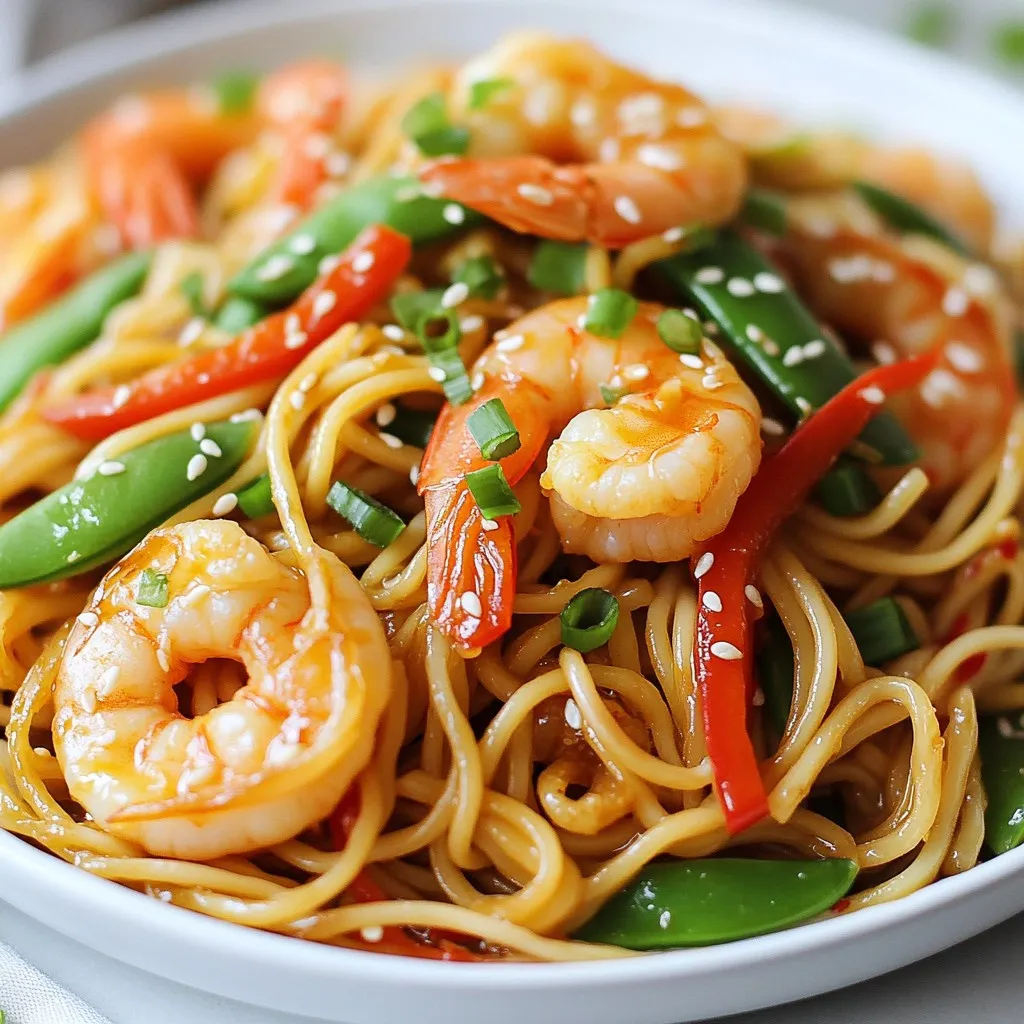
One-Pan Shrimp Lo Mein Flavorful Dinner Delight

WANT TO SAVE THIS RECIPE?

Looking for a quick and tasty dinner? This One-Pan Shrimp Lo Mein is just what you need! Packed with fresh shrimp, colorful veggies, and flavorful sauces, it’s the perfect go-to weeknight meal. You’ll love how easy it is to make in one pan, saving you time on cleanup. Let’s dive into this delightful dish that promises to impress your family and friends!

Why I Love This Recipe

  1. Quick and Easy: This one-pan dish comes together in just 25 minutes, making it perfect for busy weeknights.
  2. Flavorful Ingredients: The combination of ginger, garlic, and sesame oil adds a delightful depth of flavor that elevates the dish.
  3. Healthy and Colorful: Packed with fresh vegetables like bell peppers, snap peas, and bok choy, it’s as nutritious as it is visually appealing.
  4. Versatile Recipe: You can easily swap out the shrimp for chicken, tofu, or your favorite veggies, making it adaptable to your tastes.

Ingredients

Main Ingredients

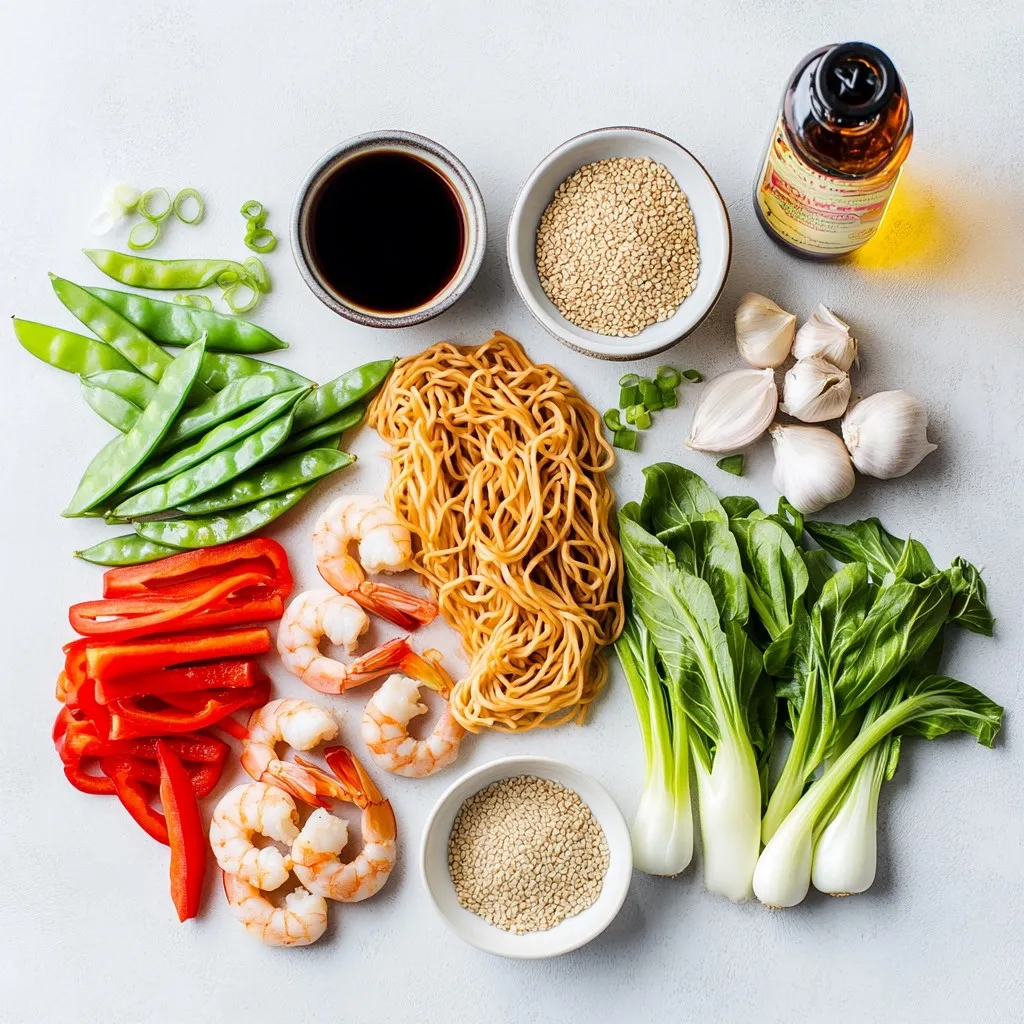
– 8 oz lo mein noodles

– 1 lb large shrimp, peeled and deveined

– 1 red bell pepper, julienned

– 1 cup snap peas

– 1 cup baby bok choy, chopped

Lo mein noodles are the star here. They are soft and chewy. You can find them in most grocery stores. Large shrimp bring a sweet and tender bite. Peel and devein them for the best taste. Fresh vegetables add color and crunch. Red bell pepper gives sweetness, while snap peas add a snap. Baby bok choy adds a slight bitterness and great texture.

Seasoning and Sauces

– 1 tablespoon sesame oil

– 2 tablespoons soy sauce

– 1 tablespoon oyster sauce (optional)

Sesame oil gives a warm, nutty flavor. It’s key in Asian cooking. Soy sauce adds saltiness and depth. Use low-sodium if you prefer less salt. Oyster sauce adds a rich umami flavor. It’s optional but highly recommended for more taste.

Additional Flavor Enhancers

– 1 teaspoon fresh ginger, grated

– 2 garlic cloves, minced

– 3 green onions, sliced

– Sesame seeds for garnish

Fresh ginger brings a spicy warmth. It wakes up the dish. Garlic adds a strong, savory note. Both should be sautéed until fragrant. Green onions add a fresh crunch on top. Finally, sesame seeds are a beautiful garnish. They add a slight crunch and nutty flavor.

This mix of ingredients creates a balance of flavors that makes each bite delicious.
Step-by-Step Instructions

Preparing the Noodles

Start cooking the lo mein noodles. Follow the package instructions closely. Once they reach the right texture, drain them well. Set them aside for later. This step is key, as the noodles hold the dish together.

Heating and Sautéing

Next, heat 1 tablespoon of sesame oil in a large skillet. Use medium-high heat until the oil shimmers. This heat brings out the nutty flavor. Now, add 2 minced garlic cloves and 1 teaspoon of grated fresh ginger. Sauté this mixture for about 1 minute. You want the garlic to be fragrant, not burned.

Cooking the Shrimp

Now it’s time for the shrimp. Add 1 pound of peeled and deveined shrimp to the skillet. Cook them for about 2 to 3 minutes. Stir frequently, watching for color change. The shrimp should turn pink and opaque. That’s how you know they’re done. Remove them from the skillet and set them aside.

Stir-Frying Vegetables

In the same skillet, add 1 julienned red bell pepper and 1 cup of snap peas. Stir-fry these for about 3 to 4 minutes. You want them to soften but still be crunchy. Next, toss in 1 cup of chopped baby bok choy. Keep stir-frying for another 2 to 3 minutes until it wilts.

Combining and Serving

Return the cooked shrimp to the skillet. Add the drained lo mein noodles next. Pour in 2 tablespoons of soy sauce and 1 tablespoon of oyster sauce if you choose. Toss everything together until well mixed and heated through. Taste and season with salt and pepper. Finally, garnish with sliced green onions and sesame seeds before serving. Enjoy your colorful and tasty meal!

Tips & Tricks

Perfecting the Shrimp

To get the best texture for shrimp, choose large, fresh shrimp. They cook evenly and stay juicy. When prepping shrimp, first peel and devein them. Rinse them under cold water to remove any grit. Pat them dry with a paper towel to help them sear nicely in the pan. This step is key for that delightful bite.

Vegetables and Substitutes

You can mix in other fresh vegetables like carrots, broccoli, or bell peppers. Each adds a unique crunch and flavor. Fresh produce gives you the best taste and nutrition. Frozen veggies are a good backup when fresh ones are not available. They save time and still work well. Just be sure to thaw them before cooking to avoid extra water in your dish.

Enhancing Flavor

For extra flavor, consider using different sauces. Try teriyaki or hoisin sauce for a twist. Add fresh herbs like cilantro or basil to brighten the dish. Spices such as red pepper flakes can add heat. Experiment with these options to find your favorite flavor combo. Each choice enhances your meal and makes it uniquely yours.

Pro Tips

  1. Use Fresh Ingredients: Fresh shrimp and vegetables will enhance the flavor and texture of your dish, making it more vibrant and delicious.
  2. Don’t Overcook the Shrimp: Cook the shrimp just until they turn pink to avoid a rubbery texture. They cook quickly, so keep an eye on them!
  3. Customize Your Veggies: Feel free to swap in your favorite vegetables like carrots, broccoli, or mushrooms to suit your taste or what you have on hand.
  4. Enhance with Heat: If you like a bit of spice, add some red pepper flakes or sriracha when combining the ingredients for an extra kick!

Variations

Protein Alternatives

You can switch shrimp for chicken, beef, or tofu. Each option offers a unique taste. If you use chicken, cut it into small pieces. Cook it for about 5-7 minutes until it’s no longer pink. For beef, thin slices work best. Cook it for about 3-4 minutes until browned. Tofu is great for a meat-free meal. Just make sure to press it first to remove excess water. Cook tofu until golden, about 5-6 minutes.

Vegan Adaptations

To make this dish vegan, swap shrimp for tofu or tempeh. Use soy sauce instead of oyster sauce for depth. Add more veggies like carrots or mushrooms to boost nutrition. Ensure you use vegetable broth for added flavor. You want a balance of sweet, salty, and umami. A splash of rice vinegar can also enhance the taste without animal products.

Noodle Alternatives

If you can’t find lo mein noodles, try rice noodles or even spaghetti. Rice noodles only take about 3-5 minutes to cook. You need to soak them in hot water until soft. For spaghetti, adjust cooking time to about 8-10 minutes. Make sure to check for doneness. Thicker noodles may need more time. Always taste as you go to ensure perfect texture.

Storage Info

Storing Leftovers

To store your leftover One-Pan Shrimp Lo Mein, place it in an airtight container. This helps keep it fresh. Store it in the refrigerator. It stays good for up to three days. After three days, the shrimp may lose flavor and texture.

Reheating Tips

When reheating, you want to keep the texture just right. The best way is to use the stovetop. Heat a small amount of sesame oil in a pan. Add the lo mein and stir gently. This method helps maintain the noodles’ chewiness. If you’re using a microwave, place the lo mein in a bowl. Add a splash of water to keep it moist. Heat in short bursts, stirring in between. This way, it warms evenly.

Freezing Suggestions

You can freeze cooked lo mein if you have extras. Place it in a freezer-safe container. Make sure to leave some space for expansion. It can last up to two months in the freezer. When you’re ready to eat, thaw it overnight in the fridge. After thawing, reheat using the stovetop method for the best results. This ensures your dish tastes fresh and delicious!

FAQs

How do I make One-Pan Shrimp Lo Mein sauce?

To make the sauce for One-Pan Shrimp Lo Mein, mix the following:

– 2 tablespoons soy sauce

– 1 tablespoon oyster sauce (optional)

– 1 tablespoon sesame oil

– 1 teaspoon fresh ginger, grated

– 2 garlic cloves, minced

Start by combining the soy sauce and oyster sauce. This mix gives your dish a rich, savory taste. If you want more depth, add oyster sauce. Adjust the flavor by adding more soy sauce for saltiness or a bit of sugar for sweetness.

Can I use different noodles for this recipe?

Yes, you can use different noodles! Here are some great substitutes:

– Rice noodles

– Spaghetti

– Udon noodles

If you use rice noodles, soak them in warm water for 20 minutes before cooking. If you choose spaghetti, cook it a bit shorter than usual. Adjust the cooking time based on the noodle type. This way, you’ll have a tasty meal no matter what noodles you pick!

What is the best way to cook shrimp for a stir-fry?

For the best shrimp, follow these tips:

– Use large shrimp, peeled and deveined.

– Cook shrimp over high heat for 2-3 minutes.

– Look for pink color to know they’re done.

Avoid overcooking shrimp. This makes them tough and rubbery. Stir them often and remove them from the heat when they turn pink. This keeps them juicy and tender.

In this article, we explored how to make delicious shrimp lo mein. You learned about key ingredients, from lo mein noodles to fresh vegetables. I shared step-by-step instructions for cooking shrimp and stir-frying veggies. We also discussed tips for perfect texture and flavor, as well as variations like vegan options. Finally, I covered storage methods for leftovers. Now, you can create this meal at home with confidence. Enjoy your cooking and taste the differenc
- 8 oz lo mein noodles - 1 lb large shrimp, peeled and deveined - 1 red bell pepper, julienned - 1 cup snap peas - 1 cup baby bok choy, chopped Lo mein noodles are the star here. They are soft and chewy. You can find them in most grocery stores. Large shrimp bring a sweet and tender bite. Peel and devein them for the best taste. Fresh vegetables add color and crunch. Red bell pepper gives sweetness, while snap peas add a snap. Baby bok choy adds a slight bitterness and great texture. - 1 tablespoon sesame oil - 2 tablespoons soy sauce - 1 tablespoon oyster sauce (optional) Sesame oil gives a warm, nutty flavor. It’s key in Asian cooking. Soy sauce adds saltiness and depth. Use low-sodium if you prefer less salt. Oyster sauce adds a rich umami flavor. It’s optional but highly recommended for more taste. - 1 teaspoon fresh ginger, grated - 2 garlic cloves, minced - 3 green onions, sliced - Sesame seeds for garnish Fresh ginger brings a spicy warmth. It wakes up the dish. Garlic adds a strong, savory note. Both should be sautéed until fragrant. Green onions add a fresh crunch on top. Finally, sesame seeds are a beautiful garnish. They add a slight crunch and nutty flavor. This mix of ingredients creates a balance of flavors that makes each bite delicious. {{ingredient_image_2}} Start cooking the lo mein noodles. Follow the package instructions closely. Once they reach the right texture, drain them well. Set them aside for later. This step is key, as the noodles hold the dish together. Next, heat 1 tablespoon of sesame oil in a large skillet. Use medium-high heat until the oil shimmers. This heat brings out the nutty flavor. Now, add 2 minced garlic cloves and 1 teaspoon of grated fresh ginger. Sauté this mixture for about 1 minute. You want the garlic to be fragrant, not burned. Now it’s time for the shrimp. Add 1 pound of peeled and deveined shrimp to the skillet. Cook them for about 2 to 3 minutes. Stir frequently, watching for color change. The shrimp should turn pink and opaque. That’s how you know they’re done. Remove them from the skillet and set them aside. In the same skillet, add 1 julienned red bell pepper and 1 cup of snap peas. Stir-fry these for about 3 to 4 minutes. You want them to soften but still be crunchy. Next, toss in 1 cup of chopped baby bok choy. Keep stir-frying for another 2 to 3 minutes until it wilts. Return the cooked shrimp to the skillet. Add the drained lo mein noodles next. Pour in 2 tablespoons of soy sauce and 1 tablespoon of oyster sauce if you choose. Toss everything together until well mixed and heated through. Taste and season with salt and pepper. Finally, garnish with sliced green onions and sesame seeds before serving. Enjoy your colorful and tasty meal! To get the best texture for shrimp, choose large, fresh shrimp. They cook evenly and stay juicy. When prepping shrimp, first peel and devein them. Rinse them under cold water to remove any grit. Pat them dry with a paper towel to help them sear nicely in the pan. This step is key for that delightful bite. You can mix in other fresh vegetables like carrots, broccoli, or bell peppers. Each adds a unique crunch and flavor. Fresh produce gives you the best taste and nutrition. Frozen veggies are a good backup when fresh ones are not available. They save time and still work well. Just be sure to thaw them before cooking to avoid extra water in your dish. For extra flavor, consider using different sauces. Try teriyaki or hoisin sauce for a twist. Add fresh herbs like cilantro or basil to brighten the dish. Spices such as red pepper flakes can add heat. Experiment with these options to find your favorite flavor combo. Each choice enhances your meal and makes it uniquely yours. Pro Tips Use Fresh Ingredients: Fresh shrimp and vegetables will enhance the flavor and texture of your dish, making it more vibrant and delicious. Don’t Overcook the Shrimp: Cook the shrimp just until they turn pink to avoid a rubbery texture. They cook quickly, so keep an eye on them! Customize Your Veggies: Feel free to swap in your favorite vegetables like carrots, broccoli, or mushrooms to suit your taste or what you have on hand. Enhance with Heat: If you like a bit of spice, add some red pepper flakes or sriracha when combining the ingredients for an extra kick! {{image_4}} You can switch shrimp for chicken, beef, or tofu. Each option offers a unique taste. If you use chicken, cut it into small pieces. Cook it for about 5-7 minutes until it's no longer pink. For beef, thin slices work best. Cook it for about 3-4 minutes until browned. Tofu is great for a meat-free meal. Just make sure to press it first to remove excess water. Cook tofu until golden, about 5-6 minutes. To make this dish vegan, swap shrimp for tofu or tempeh. Use soy sauce instead of oyster sauce for depth. Add more veggies like carrots or mushrooms to boost nutrition. Ensure you use vegetable broth for added flavor. You want a balance of sweet, salty, and umami. A splash of rice vinegar can also enhance the taste without animal products. If you can't find lo mein noodles, try rice noodles or even spaghetti. Rice noodles only take about 3-5 minutes to cook. You need to soak them in hot water until soft. For spaghetti, adjust cooking time to about 8-10 minutes. Make sure to check for doneness. Thicker noodles may need more time. Always taste as you go to ensure perfect texture. To store your leftover One-Pan Shrimp Lo Mein, place it in an airtight container. This helps keep it fresh. Store it in the refrigerator. It stays good for up to three days. After three days, the shrimp may lose flavor and texture. When reheating, you want to keep the texture just right. The best way is to use the stovetop. Heat a small amount of sesame oil in a pan. Add the lo mein and stir gently. This method helps maintain the noodles' chewiness. If you're using a microwave, place the lo mein in a bowl. Add a splash of water to keep it moist. Heat in short bursts, stirring in between. This way, it warms evenly. You can freeze cooked lo mein if you have extras. Place it in a freezer-safe container. Make sure to leave some space for expansion. It can last up to two months in the freezer. When you're ready to eat, thaw it overnight in the fridge. After thawing, reheat using the stovetop method for the best results. This ensures your dish tastes fresh and delicious! To make the sauce for One-Pan Shrimp Lo Mein, mix the following: - 2 tablespoons soy sauce - 1 tablespoon oyster sauce (optional) - 1 tablespoon sesame oil - 1 teaspoon fresh ginger, grated - 2 garlic cloves, minced Start by combining the soy sauce and oyster sauce. This mix gives your dish a rich, savory taste. If you want more depth, add oyster sauce. Adjust the flavor by adding more soy sauce for saltiness or a bit of sugar for sweetness. Yes, you can use different noodles! Here are some great substitutes: - Rice noodles - Spaghetti - Udon noodles If you use rice noodles, soak them in warm water for 20 minutes before cooking. If you choose spaghetti, cook it a bit shorter than usual. Adjust the cooking time based on the noodle type. This way, you’ll have a tasty meal no matter what noodles you pick! For the best shrimp, follow these tips: - Use large shrimp, peeled and deveined. - Cook shrimp over high heat for 2-3 minutes. - Look for pink color to know they’re done. Avoid overcooking shrimp. This makes them tough and rubbery. Stir them often and remove them from the heat when they turn pink. This keeps them juicy and tender. In this article, we explored how to make delicious shrimp lo mein. You learned about key ingredients, from lo mein noodles to fresh vegetables. I shared step-by-step instructions for cooking shrimp and stir-frying veggies. We also discussed tips for perfect texture and flavor, as well as variations like vegan options. Finally, I covered storage methods for leftovers. Now, you can create this meal at home with confidence. Enjoy your cooking and taste the difference!

One-Pan Shrimp Lo Mein

A flavorful one-pan dish featuring shrimp and vegetables tossed with lo mein noodles.
Course Main Course
Cuisine Asian
Servings 4
Calories 350 kcal

Ingredients
  

  • 8 oz lo mein noodles
  • 1 lb large shrimp, peeled and deveined
  • 1 tablespoon sesame oil
  • 2 tablespoons soy sauce
  • 1 tablespoon oyster sauce (optional for extra depth of flavor)
  • 1 teaspoon fresh ginger, grated
  • 2 cloves garlic, minced
  • 1 unit red bell pepper, julienned
  • 1 cup snap peas
  • 1 cup baby bok choy, chopped
  • 3 unit green onions, sliced
  • to taste salt and pepper
  • for garnish sesame seeds

Instructions
 

  • Prepare the Noodles: Start by cooking the lo mein noodles according to the package instructions. Once cooked, drain them well and set aside for later use.
  • Heat the Oil: In a large skillet or wok, add the sesame oil and heat it over medium-high heat until shimmering.
  • Sauté Aromatics: Add the minced garlic and grated ginger to the skillet. Sauté for approximately 1 minute, or until the mixture is fragrant, taking care not to burn the garlic.
  • Cook the Shrimp: Introduce the peeled and deveined shrimp into the skillet. Cook for about 2-3 minutes, stirring frequently, until the shrimp turn pink and are cooked through. Once ready, remove the shrimp from the skillet and set aside.
  • Stir-Fry Vegetables: In the same skillet, add the julienned red bell pepper and snap peas. Stir-fry for about 3-4 minutes, or until the vegetables begin to soften but still retain some crunch.
  • Add Bok Choy: Next, toss in the chopped baby bok choy. Continue stir-frying for an additional 2-3 minutes until the bok choy is wilted and tender.
  • Combine Ingredients: Return the cooked shrimp to the skillet along with the prepared lo mein noodles. Pour in the soy sauce and oyster sauce (if using). Toss all the ingredients together until evenly combined and heated through. Taste and season with salt and pepper as needed.
  • Garnish and Serve: Before serving, sprinkle sliced green onions and sesame seeds over the top for an extra touch of flavor and presentation.

Notes

Feel free to adjust the vegetables based on your preference.
Keyword lo mein, one pan, quick meal, shrimp

WANT TO SAVE THIS RECIPE?